
The rapture of booth friends
Finding the third dimension in friendship again

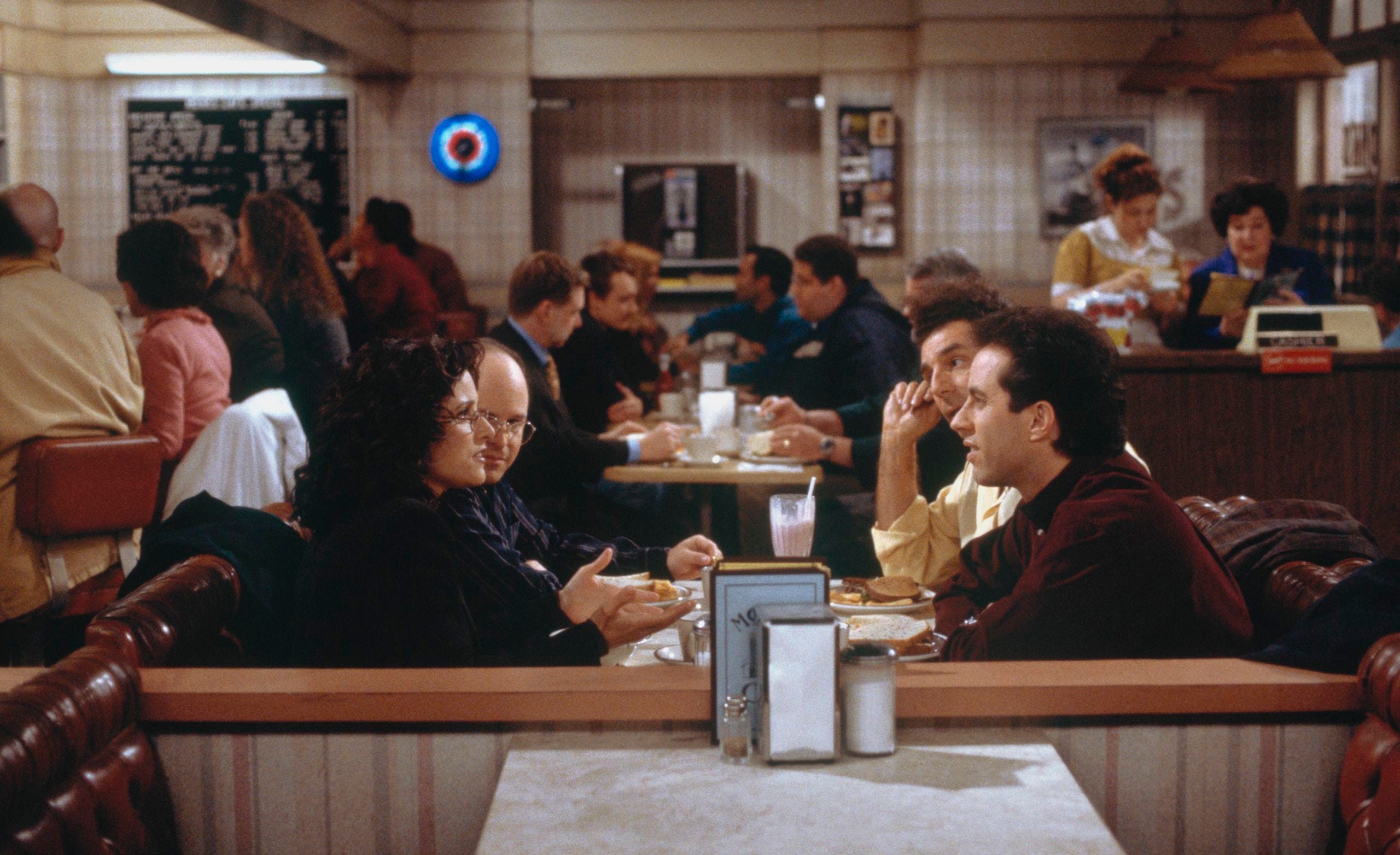
I miss booth friends. These are friends you meet regularly in a booth, or any casual setting where someone saves you a seat. I’m still looking for booth friends in Maine, because my husband and I didn’t know anyone when we moved here. When we told friends that, they asked, so why Maine? I struggled to find words that described the mysterious pull and high risk, so I grabbed the obvious reasons: It’s beautiful. And green. You can see the stars. But it wasn’t till a few months after moving here that I realized why Maine felt like home: It has frequencies we’ve been missing ever since friendship lost a dimension.
I don’t remember how I made friends as a kid. They just were my friends. We passed notes written in sparkly gel pen, listened to blink-182, and peeled off soggy socks on wintery Chicago days. We biked to 7-Eleven to suck on Slurpees, no matter how gelatinous the summer air, only to get lost in a Gameboy. “Chop Suey” was our “Bohemian Rhapsody” we’d sing-yell in the car. We wailed at family members when they booted us off AOL, or worse — Napster — because they had to make a phone call.
The internet arrived at the apex of our adolescence. Till this point, friendship had mostly been three-dimensional, but it was on a new road now, one that didn’t need roads. We could talk to our friends on a new plane of existence, and because it was flatter and less concerned with the stuffiness of physics, it took you wherever you needed to go, faster.
It felt like we’d outwitted evolution. And in some ways, we did. You got mail! You asked a butler things you couldn’t ask your parents. The sound of an AOL Instant Messenger door opening could make or break your day. Bedtime didn’t matter: If you could contain the banshee scream of your modem connecting, there were unlimited friends just waiting for you. We diligently marked each new height with pencil and an appropriate sense of awe.
In all that dial-up frenzy, it was easy to miss the pangs. As a shy kid, I’d always felt safest in two dimensions. I started typing at two, and I loved roaming the halls of DOOM, punching the undead after homework. Encyclopedia nights were a great time: My dad would fire up our Microsoft Encarta ‘95 CD-ROM, a shiny new vortex of dazzling multimedia, and quiz me about composers with clips of classical music. After my family succumbed to dysentery on the Oregon Trail, I built web sites as a teen, some for school projects, others in honor of blink-182. Screens also gave me time to think about what to say, so instant messengers kept my confidence — and friendships — alive in ways a phone never could.
Then the pangs turned into aches. The promise of constant connection had given me a sense of security that I could move as often as I needed to, for jobs, family, or dreams. But more than 20 addresses later, I felt empty, which didn’t seem possible on a steady Pac-Man diet of tiny hearts. I’d always imagined friendship as a final destination, like we were all on the same journey and would reconvene at the end in a utopia of moonlit Gatsby-esque dinner parties and steadfast pinky swears. But my kitchen table was mostly a mess of to-dos, and I couldn’t even see the moon where I lived. What was I missing?
I thought I’d been running toward something, but I realized I was actually running from something. So I turned around.
There’s a philosophical debate in physics about falling trees. Whether or not the tree makes a sound depends on how you view sound: Is it the vibrations in the air? Or is the sensation of hearing those vibrations?
When I moved my friendships to two dimensions, I lost access to frequencies that only live in three dimensions, and what our meticulously evolved bodies are designed to feel. The internet gave us so much information, I didn’t notice when a lot of it went missing. After my friends and I dispersed across the world, I saw what they shared online, but I no longer saw them cry, or held their hands, or shimmered in the disco ball of their affection. The vibrations were gone, and so was the fullness of friendship.
But that totality is exactly what I’d been cheerily evading. Real connection means experiencing the whole spectrum of a relationship, not just the bright parts. It’s like I’d been on the moon this whole time, walking with its rotation to stay in the sun, waving to everyone back on Earth. Now I wanted to stop and spin into the darkness, so we could become better acquainted.
That’s why we moved to Maine: It grounds us. As children, we unwittingly spent so much time in meditative states, swinging our feet waiting to be picked up, sitting around a bonfire, falling asleep in the backseats of cars. Maine is magnetic with the nostalgia of things not lost yet, and after living in two dimensions for so long, getting zapped with those frequencies was a quantum leap back into our earthbound bodies; the meatier portions that were exposed to fun and pain, and the sentience that made sense of it all.
Cascades of yellow dandelions, the soft lilt of mourning doves, and rocks wearing little seaweed hats were some of the best parts of being a kid because they were present when my friendships formed. Seeing them now instantly sends me back to those liminal moments, but a step removed, so I can actually take in the dioramic view of my friends, the way they move, and the sudden glitter of a joke landing. When I see business signs with phone numbers and no area code, or the distant horn of a train wafts through our open windows, I’m five in rural Illinois again, but in an adult body, one that isn’t afraid of the dark anymore.
I want friendship back in all three dimensions, which includes all the darker energies, too, like the hesitation that only emerges when time isn’t pressed into a phone call, and someone avoids your eyes or absentmindedly shreds paper from a straw. I long for flare-ups of high school insecurities, like feeling left out, only to tame them later with that aged sentient meat wisdom. I want the bulk of silence in a room, any type of silence, because it has more sound than an unanswered text.
My generation was one of the last to grow up without the internet, so we saw how it expanded our universe and space for connection. It was at our service, and it saved us the energy we spent in transitional stages waiting, commuting, or rifling through dozens of encyclopedias. It gave us time back, and we could choose how else to spend it. There is no greater gift.
We still have a choice. The dark is vast, too, but it’s also where we dream, play flashlight tag, and our clothes absorb the smell of firewood. It’s where the moon is gigantic and leans on the horizon like a table, rosy and blissed out, watching her friends having a good time. And when I’ve tried to take a picture of the moon, even in Maine’s reliable darkness, I’ve noticed the shots are missing something — the elemental frequencies that our bodies crunch and transform into awe. I have pictures of friends, but not of the feeling of walking into a crowded place and seeing a hand pop out to wave me over. Why else save a seat?
What a wonderful piece of work, Kasia! I meet booth friends once or twice a week. I can’t imagine life without them. I am grateful for the ability to maintain contact with friends and family through texting, email, etc. But, nothing beats crying and laughing while sharing day-to-day life stories in a booth over a cup of tea or coffee. Looking forward to more posts from you. You are a brilliant, creative young woman with so much to say. 🩷
"After my friends and I dispersed across the world, I saw what they shared online, but I no longer saw them cry" -- oof, this is the thing ☹️ I always wondered why keeping in touch after moving around just wasn't working the way i thought it would, but this is it